Content
Using GPG Keys to sign Git Commits - Part 1
For a while now, I've been using GPG Keys to sign my Git Commits to prove that my commits on GitHub are genuine and from me. Over the last few weeks, I've been inspired by a couple of colleagues (Kudos to Adrian and Julie if you're reading this) to dig out my YubiKey and use these for my key signing activities. While there are several blog posts on the topic already, I encountered a number of roadblocks along the way. The intent of this blog post is to be the first of a series, where we'll explore what GPG is, why it may be valuable to you and how you can get going using them. We'll then take this forwards an additional step, and show how you can use YubiKeys as a second factor of verification and the benefits of this approach. By no means am I the world's expert in cryptography, and some of these topics, but I wanted to document my own understanding for posterity, as I'll inevitably need to repeat/review the process in the future. I hope that this may be useful to you.
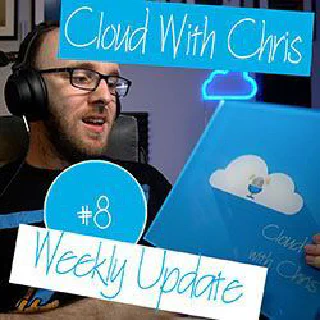
V008 - Weekly Technology Vlog #8 (Changing Role, Guest Appearances, LOTS of Azure News)
Chris marks two months of weekly vlogging with a big career update: leaving FastTrack for Azure to become a Cloud Solution Architect in Microsoft's UK Customer Success Unit, focusing on the Manufacturing & Resources industry. The cloudwithchris.com site is also refreshed with a PodScribe-powered interactive transcript player that highlights spoken words in real time and enables crowd-sourced corrections — a meaningful accessibility improvement. Azure news is substantial this week, headlined by Azure RBAC for Key Vault data plane reaching GA (enabling secret- and certificate-level access control) and Azure Front Door Standard & Premium entering preview with private origin support via Private Link.
The Past Four Years
For the past four years, I've been part of a team at Microsoft called FastTrack for Azure. FastTrack for Azure is part of Azure Engineering's Customer Experience Team, focused on successfully on boarding customers on a project-by-project basis as they bring production workloads online. There is never a perfect time to say goodbye, but for me - now is the time. From Monday, I'll be taking on a new role within Microsoft as a Senior Cloud Solution Architect within Microsoft UK's Customer Success Unit, focusing on the Manufacturing & Resources Industries. Career changes can be big moments of change, and a good opportunity to reflect.
Jonnychipz - In Conversation with Chris Reddington
Mr Chris Reddington talks to us about his life as a Microsoft Azure Fast Track Engineer and some of the pain points he helps Customer navigate. We discuss DevOps and Infrastructure as Code as well as key skills needed for this modern IT world we now live in and more!

27 - The Compute Resource Consolidation Pattern (Optimise for Cost!)
Are you running dedicated compute for every tenant, microservice, or application instance — and paying for it? The Compute Resource Consolidation pattern shows you how to consolidate tasks onto shared infrastructure, such as a single AKS cluster with namespace isolation or an Azure SQL elastic pool, to reduce costs and management overhead. This episode explores the key trade-offs: blast radius containment, noisy neighbour contention, scalability profiles, and multi-tenancy strategies. Part of the "Architecting for the Cloud, One Pattern at a Time" series.
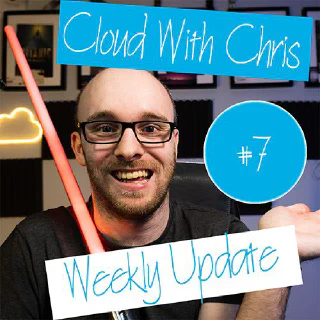
V007 - Weekly Technology Vlog #7 (Recap, NEW SITE, NEWS!)
Chris recaps his AzureIsh Live guest appearance and the messaging patterns episode with Will Eastbury covering pub-sub, priority queues, and pipes-and-filters. He showcases the Cloud with Chris v2 website prototype built in Hugo with AI-generated transcripts via Podscribe for accessibility, covers the npm dependency confusion attack vector affecting Azure Artifacts and GitHub packages, and highlights Azure's deployment to the International Space Station in partnership with HPE.
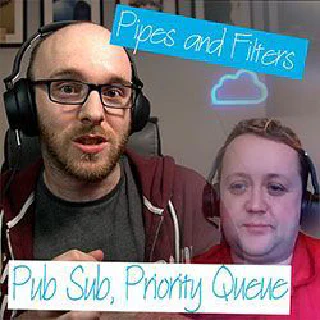
26 - The Pub Sub, Priority Queue and Pipes and Filter Patterns
Chris Reddington and Will Eastbury cover three closely related messaging patterns in one packed episode. They start with the Publish-Subscribe (Pub/Sub) pattern — arguably the most transformative shift in enterprise messaging — where a single producer broadcasts to multiple isolated subscribers via Azure Service Bus topics or Azure Event Grid. Real-world use cases include insurance aggregators, credit check pipelines, and bank account sign-up workflows. From there they move to the Priority Queue pattern, which ensures high-priority messages are processed before lower-priority ones even when consumers are under load. Finally, the Pipes and Filters pattern decomposes complex message processing into a chain of discrete, reusable transformation steps — reducing complexity and enabling independent scaling of each stage. The episode also connects these patterns back to earlier topics like Competing Consumers and Queue-Based Load Leveling, and flags related patterns including Choreography and Compensating Transactions.
Contributing towards Azure GitHub Actions
I've talked in the past about my Open Source journey, and some of the contributions that I have made in the community. In my current role, I've been leading on the global strategy for my team's DevOps practice, defining the areas of focus and initiatives that may be beneficial for the team. In this post, I'm going to talk through one of these initiatives, and how you can contribute towards the Azure GitHub Actions experience!
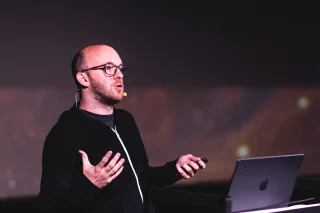
Azureish After Dark with Chris Reddington from Microsoft and some Among Us
Azureish After Dark with Chris Reddington from Microsoft and some Among Us

25 - A conversation on Mental Health
In this candid conversation, Chris Reddington is joined by Andrew Nathan — a former Australian Special Forces soldier turned tech professional — to talk openly about mental health. Drawing on personal experiences with grief, COVID-19 lockdown isolation, and identity loss, both guests discuss the importance of speaking up, seeking help, and understanding that it is okay not to be okay. A vital listen for anyone in tech or beyond.