Content

5 - The API Economy
APIs are the connective tissue of modern cloud architectures — but poor API design compounds into technical debt that is expensive to unwind. In this episode, Chris Reddington and Peter Piper explore the full lifecycle of API design: defining versioning contracts up front, modernising legacy APIs using the Strangler and Façade patterns, and securing APIs with JWT tokens, OAuth 2.0, and OIDC. They also cover Azure API Management patterns, circuit breakers, throttling, key rotation with Azure Key Vault, and the DevSecOps practices that keep an API estate healthy at scale.

4 - Hackathons
Hackathons are a powerful accelerator for learning, innovation, and community building — but what does it actually take to participate in, organize, or mentor at one? In this episode, Chris is joined by Maria Vrabie, an experienced hackathon participant, organizer, and mentor with a background at Microsoft. They explore the full spectrum of hackathon formats: from university weekend events and charity hack days to corporate open hacks run with enterprise customers. Maria shares candid stories from both sides of the organizer table, practical advice for first-timers, and why hackathons are just as relevant for seasoned engineers as they are for students looking to break into tech.

3 - DevOps in a Cloud World
DevOps is the union of people, process, and products to enable the continuous delivery of value to end users — not just code or features. In this episode, Abel Wang, Principal Developer Advocate and DevOps Lead at Microsoft, joins Chris to cover the foundations of DevOps, telemetry-driven development, database DevOps, feature flags, Site Reliability Engineering, and the importance of shifting left on quality and security.

2 - Cost Control
Moving to the cloud shifts infrastructure spend from capital expenditure (CapEx) to operational expenditure (OpEx)—but only if you think about cost correctly from the start. This episode covers the cloud cost mindset: right-sizing, auto-scaling (scale out vs scale up), compute resource consolidation, governance through resource tagging and policy, pricing calculators, reserved instances, and how to build cost awareness into your architecture from day one.

1 - Requirements in Context
Every cloud project starts with requirements. In this episode, Chris explores the critical pillars of cloud architecture: resilience (SLA, RTO, RPO, MTTR, MTBF), scalability, performance, and cost. Learn why defining requirements upfront—before drawing architecture diagrams—is essential, and how the same on-premises thinking about availability translates directly into the cloud.
0 - Teaser
This is the first recording, a brief teaser ahead of launching cloud with Chris. Stay tuned, and follow for more info!
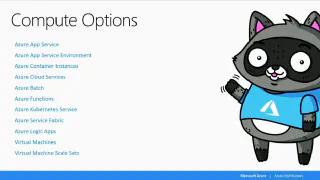
Azure Mythbusters: I can choose any Azure Compute Service to solve any problem!


A lot of people will take a round peg and try and push it into a square hole – or in this case, take their code and try and cram it into whatever service they happen to like at the time. There are specialised services on Azure, as well as some generic ones, but we’re going to talk about some of the more specialised compute services and what things you need to consider when using them.
I can use any Azure Compute Service to solve any problem? (Azure Mythbusters)

Choosing the wrong Azure compute service leads to mismatched scaling behaviour, cost overruns, and avoidable management overhead. This Azure Mythbusters episode compares App Service, App Service Environment, Container Instances, AKS, Service Fabric, Azure Batch, Azure Functions, Logic Apps, Virtual Machines, and VM Scale Sets — highlighting decision factors such as stateful versus stateless workloads, latency requirements, compliance needs, and auto-scale granularity.
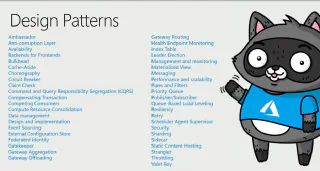
Azure Mythbusters: Cloud is new, so there are no clear architecture patterns!
There are a lot of established cloud design patterns. These don’t all apply specifically to Azure, either – some of them apply intrinsically to cloud services, and some to general services and architectures. If you’ve been to the Azure Architecture Center before, and you’ve seen what used to be the patterns and practices guidance, I’d advise you to take another look. We’re adding new ones all the time as we see them, all of which are common patterns that Azure customers are using to isolate and work around things they see in applications to make them work better.
There are no clear architecture patterns for the Cloud? (Azure Mythbusters)
Cloud design patterns are abundant and well-documented on the Azure Architecture Center — from established patterns like cache-aside and materialized view to cloud-native ones like circuit breaker and health endpoint monitoring. This Azure Mythbusters episode tours the full pattern catalogue and deep-dives four key patterns: cache-aside, circuit breaker (open/half-open/closed states), health endpoint monitoring, and materialized view in CQRS/event sourcing scenarios.