APIs

V035 - Weekly Technology Vlog #35
Chris covers a wave of Azure service deprecations and retirements scheduled through 2022-2024, the launch of GitHub CLI 2.0 with its new extension model, and npm's TLS 1.0/1.1 deprecation. He highlights an impactful accessibility episode with Kaizota about hearing impairment at tech conferences, discusses GitHub branch protection rules for shifting left on code quality, and shares insights on Azure Front Door Standard and Premium tiers.
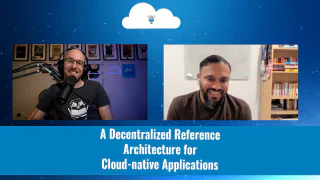
43 - A Decentralized Reference Architecture for Cloud-native Applications
 Cloud with Chris
Asanka Abeysinghe, Chief Technology Evangelist at WSO2, introduces the cell-based reference architecture — a vendor-neutral, decentralised framework for cloud-native applications. The session explores microservices governance challenges, how Domain-Driven Design scopes service responsibilities into well-bounded cells, and how the cell-based model aligns architecture, development, and DevOps teams into cohesive autonomous units built around business domains.
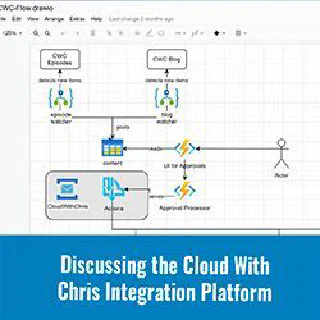
Discussing the Cloud with Chris Integration Platform
Chris is joined by Karl Cooke (IrishTechie.com) for a deep dive into the CloudWithChris.com integration platform — a real-world Azure integration architecture built to automate content distribution to Twitter, LinkedIn, Facebook, and Reddit, and to amplify updates from the Azure, GitHub, and Azure DevOps blogs. The session walks through the full architecture: Azure Functions, Azure Service Bus topics and queues, Azure Table Storage, Azure Logic Apps, and a Vue.js management UI, plus a custom URL shortener for per-platform analytics.
How to use Managed Identity and APIM to call Azure Services from an APIM policy directly
Back in June, I wrote a blog post on API Management and how you can use API Management policies to enforce access restriction policies. I was going to write a follow up post on how to use API Management policies in additional scenarios, but it's one of those scenarios where great minds think alike!

Tales from the Real World - Azure AD B2C: A real silver bullet
When COVID-19 forced the vOpen.Tech conference to pivot from a physical event to a fully virtual one, the organising team had fewer than two weeks to build a production-ready registration and identity system — with minimal budget. In this episode, Chris is joined by Facundo La Rocca (Faku), a .NET developer and conference organiser from Buenos Aires, who shares how Azure AD B2C became the silver bullet that made it possible: delivering a scalable, secure IAM platform with almost no custom code, at no cost, in under a fortnight.
V027 - Weekly Technology Vlog #27
In the first tech-only episode of the new alternating format, Chris demonstrates GitHub Copilot's Technical Preview using Ruby and Python — from API integrations and regex generation to Azure Functions and IoT Hub messaging — and discusses the FAQ around code ownership, training data, and personal information filtering. The episode also covers CNCF fundamentals, Azure API Management policies with JWT token validation, Traefik proxy on Kubernetes, and the general availability of Azure Arc, including Azure SQL enabled by Arc.
Using API Management Policies to enforce access restriction policies
We recently introduced you to API Management, how it maps to architectural principals and why you may consider using it as a producer or consumer of APIs. In this post, we'll be continuing on the story - focusing mostly on the API Management policies functionality.
Introduction to Azure API Management
We now live in a world where multiple systems connect or integrate with each other. This is not new, and has been a technology trend for some time. But - in a world of distributed compute (on the increase, thanks to cloud), and the rise of microservices, we find that we have more and more services that we need to integrate with each other. Integration is typically handled through a couple of routes, including Enterprise Messaging (such as message brokers), as well as APIs (Application Programming Interface). There are many areas that we should consider when building our APIs, and that's what we'll give some thought to in this blog post.

38 - Hands-on with The Geode Pattern (Build globally distributed applications!)
Episode 11 covered the Geode pattern in theory — now it's time to get hands-on! Will Eastbury returns to walk through a real-world OData service deployed across three Azure regions (US West, Australia Southeast, and UK West), stitched together by Azure Front Door for active-active routing. Watch how Cosmos DB replicates data across all regions as a shared backplane, how health probes detect and remove unhealthy geodes from rotation, and the ASP.NET middleware pattern needed to handle URL rewriting — a critical authentication gotcha when hosting services behind a reverse proxy.

Social Opinion with Jamie Maguire
Have you ever wondered what it takes to build a production SaaS platform in your own time? In this Tales from the Real World episode, Chris is joined by Jamie Maguire — Developer, Microsoft MVP (AI), and Pluralsight Author — who shares the full story behind Social Opinion, a Twitter analytics and productivity platform built with .NET and Azure. Jamie walks through the evolution from a custom Bayesian text analytics API (built during his master's degree) to a full SaaS powered by Azure Cognitive Services, covering social listening, sentiment analysis, content scheduling, and audience insights. He also shares practical advice for anyone looking to build their own product: pick something you're genuinely passionate about, validate demand before writing code, and ship early.