Cloud Architecture
30 - The Cache Aside Pattern (Optimise your caching approach!)
The cache-aside pattern loads data on demand from a data store into a cache, placing the synchronisation logic in the application layer when the cache does not natively support read-through or write-through operations. This episode covers cache-miss handling, expiration and eviction policies for Azure Cache for Redis, consistency challenges across distributed instances, and when to pre-warm the cache at startup instead.
V010 - Weekly Technology Vlog #10 (Episode backlog until Mid-July! New Microphone, Ignite Content!)
Vlog #10 is a milestone episode: Chris celebrates his birthday and a full year of Cloud With Chris with a new Shure SM7B microphone upgrade. The bulk of the episode is a walkthrough of Microsoft Ignite announcements, covering Azure Arc-enabled Machine Learning for on-premises data sovereignty scenarios, the Azure Communication Services and Microsoft Teams interoperability story, and significant security updates including Azure Key Vault Managed HSM (preview) and Trusted Launch for VMs. GitHub Actions fans also get a bonus segment on four lesser-known platform capabilities, including semantic release note generation and bring-your-own-environment workflows.

29 - The Sidecar and Ambassador Patterns
When modernising a legacy application, rewriting everything from scratch is rarely feasible. The Sidecar and Ambassador cloud design patterns offer a pragmatic alternative — attach a companion process to offload cross-cutting concerns like retry logic, circuit breaking, and protocol translation without modifying the application itself. Chris and Peter explore both patterns in depth, covering when to use each, how they relate to service meshes, and their role in Kubernetes-based architectures.
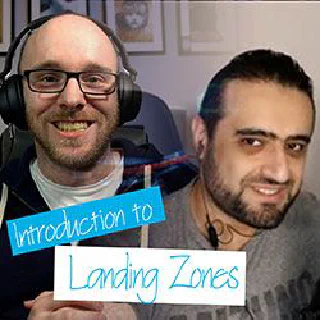
28 - Intro to Landing Zones
What exactly is an Azure Landing Zone, and why does every cloud architect keep talking about it? In this episode, Chris Reddington is joined by Karim Fahmy — an Azure Solutions Architect with over 12 years of IT experience — to demystify Azure Landing Zones and their place within the Cloud Adoption Framework. Learn how landing zones provide the structured foundation covering networking topology, identity, governance, subscriptions, and security that your workloads need to succeed in the cloud. The episode also covers Azure Blueprints, Terraform automation, and real-world strategies for incrementally building and evolving your cloud foundation over time.

27 - The Compute Resource Consolidation Pattern (Optimise for Cost!)
Are you running dedicated compute for every tenant, microservice, or application instance — and paying for it? The Compute Resource Consolidation pattern shows you how to consolidate tasks onto shared infrastructure, such as a single AKS cluster with namespace isolation or an Azure SQL elastic pool, to reduce costs and management overhead. This episode explores the key trade-offs: blast radius containment, noisy neighbour contention, scalability profiles, and multi-tenancy strategies. Part of the "Architecting for the Cloud, One Pattern at a Time" series.
26 - The Pub Sub, Priority Queue and Pipes and Filter Patterns
Chris Reddington and Will Eastbury cover three closely related messaging patterns in one packed episode. They start with the Publish-Subscribe (Pub/Sub) pattern — arguably the most transformative shift in enterprise messaging — where a single producer broadcasts to multiple isolated subscribers via Azure Service Bus topics or Azure Event Grid. Real-world use cases include insurance aggregators, credit check pipelines, and bank account sign-up workflows. From there they move to the Priority Queue pattern, which ensures high-priority messages are processed before lower-priority ones even when consumers are under load. Finally, the Pipes and Filters pattern decomposes complex message processing into a chain of discrete, reusable transformation steps — reducing complexity and enabling independent scaling of each stage. The episode also connects these patterns back to earlier topics like Competing Consumers and Queue-Based Load Leveling, and flags related patterns including Choreography and Compensating Transactions.
CGN1 - Cloud Gaming Notes Episode 1 - Hosting a Game Server
Ever thought about what it takes to host a game in the Cloud? Well, this is the series for you! On the first Wednesday of every month, we explore Cloud Concepts that impact your journey to a connected multiplayer gaming experience! In this first session, we'll play some Minecraft and talk to the concept of a hosted game server.

V005 - Weekly Technology Vlog #5 (My Setup, Architecture Patterns, Mental Health and NEWS)
Chris recaps the health endpoint monitoring pattern episode and a PC build blog, then previews the debut of Cloud Gaming Notes with Lee Williams on game server hosting, and a candid mental health conversation with Andrew Nathan. He reviews Azure updates including Azure Cloud Services Extended Support ARM-based deployment, Azure AD Premium 99.99% SLA, the Azure Architecture Center January digest, and GitHub engineering posts on canary deployment strategies and JavaScript performance optimisation.

24 - Health Endpoint Monitoring Pattern (Monitor your service and its dependencies!)
Stop waiting for users to tell you something is broken. The Health Endpoint Monitoring pattern gives your services a dedicated health-check endpoint that aggregates the status of all dependent components—databases, APIs, storage—into a single observable response. This episode covers the pattern in detail, including design considerations around caching, security, denial-of-service exposure, and integration with Azure Monitor and Application Insights.
23 - Gatekeeper and Valet Key Patterns - Secure your APIs and Resources
Continuing the 'Architecting for the Cloud, one pattern at a time' series, Chris and Peter Piper explore two closely related cloud design patterns for securing APIs and backend resources. The Gatekeeper pattern positions a dedicated host between untrusted clients and trusted backend services — handling authentication, authorization, request validation, protocol translation, and rate limiting. The Valet Key pattern complements it by issuing short-lived, scope-restricted tokens (such as Azure SAS tokens) so clients can access specific resources directly, reducing load on central services without sacrificing security. The episode covers practical implementation options on Azure including API Management, Azure Key Vault, and Azure App Configuration.