Cloud Native

29 - The Sidecar and Ambassador Patterns
When modernising a legacy application, rewriting everything from scratch is rarely feasible. The Sidecar and Ambassador cloud design patterns offer a pragmatic alternative — attach a companion process to offload cross-cutting concerns like retry logic, circuit breaking, and protocol translation without modifying the application itself. Chris and Peter explore both patterns in depth, covering when to use each, how they relate to service meshes, and their role in Kubernetes-based architectures.
CGN2 - Cloud Gaming Notes Episode 2 - Matchmaking Services
Ever thought about what it takes to host a multiplayer game in the cloud? In the second episode of Cloud Gaming Notes, Chris and Lee Williams go hands-on with Halo 5 Guardians to explore the engineering behind matchmaking services. They cover the Actor model and Azure Service Fabric, skill-based matchmaking algorithms, the critical role of latency in competitive gaming, and how live ops and DevOps principles keep a game-as-a-service continuously updated without downtime. Real-world cloud architecture through the lens of AAA gaming.

27 - The Compute Resource Consolidation Pattern (Optimise for Cost!)
Are you running dedicated compute for every tenant, microservice, or application instance — and paying for it? The Compute Resource Consolidation pattern shows you how to consolidate tasks onto shared infrastructure, such as a single AKS cluster with namespace isolation or an Azure SQL elastic pool, to reduce costs and management overhead. This episode explores the key trade-offs: blast radius containment, noisy neighbour contention, scalability profiles, and multi-tenancy strategies. Part of the "Architecting for the Cloud, One Pattern at a Time" series.
CGN1 - Cloud Gaming Notes Episode 1 - Hosting a Game Server
Ever thought about what it takes to host a game in the Cloud? Well, this is the series for you! On the first Wednesday of every month, we explore Cloud Concepts that impact your journey to a connected multiplayer gaming experience! In this first session, we'll play some Minecraft and talk to the concept of a hosted game server.
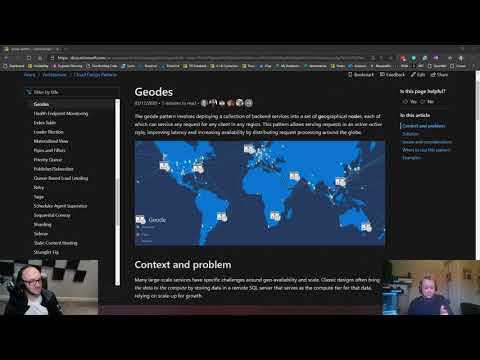
11 - The Geode Pattern - What is it and how can it be useful for my app?
You may know patterns like Retry, Circuit Breaker, or Deployment Stamps — but have you heard of the Geode pattern? In this Architecting for the Cloud episode, Chris and Will Eastbury (who contributed to the original Azure Architecture Center documentation for this pattern) explore how Geodes enable planet-scale, active-active applications where every node can serve any user from any region. Unlike Deployment Stamps (which are tenant-scoped), Geodes replicate data across all regions, eliminating active-passive compute wastage and delivering consistent low-latency experiences globally. The session covers key trade-offs around data sovereignty, replication costs, and the evolution toward intelligent edge deployments — and includes a walkthrough of a globally distributed real-time voting app built with Azure Functions, Cosmos DB, and SignalR.
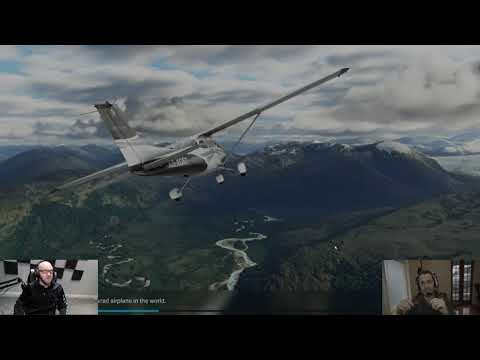
18 - Tales from the Real World - Defying Gravity.. The magic behind Flight Simulator 2020
What's actually powering Microsoft Flight Simulator 2020 — and what can cloud architects learn from it? Chris Reddington takes to the virtual skies over Queensland with former colleague Cam Adams, flying a Cessna 172 from Archerfield aerodrome while discussing the real Azure services behind one of the most technically ambitious games ever made. From CDN-based asset distribution and event-driven live weather to PlayFab game backends and DDoS protection — this is cloud architecture on the fly.
Azure Myth 6: Cloud is expensive - Azure MythBuster

Cloud is not inherently more expensive than on-premises once you account for hardware depreciation, power, cooling, and network costs — but it requires designing cost into your architecture from the start. This Azure Mythbusters episode examines fixed versus variable cost envelopes, auto-scaling strategies for spiky workloads like Black Friday traffic, the IaaS/PaaS/serverless cost spectrum, and cost as an implicit sixth pillar alongside the five pillars of software quality.