Developer Experience
From 'It works on my machine' to 'It was written by a machine' - GitHub Codespaces & Copilot
Being a developer is hard. From knowing the building blocks of programming, through to keeping on top of the latest languages and frameworks. That’s before we even think about running systems in production But at some point, we’ve all uttered those words ‘It works on my machine’. Or, may have looked up code snippets from our favourite search engine What if there was a better way for both? In this demo-led session, Chris will introduce GitHub Codespaces and GitHub Copilot, explaining how they can improve your developer experience and make you even more productive!!
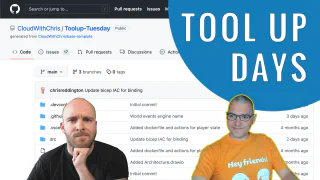
ToolUp Days #14
Chris and Matt solve a recurring ToolUp Days pain point — inconsistent developer environments — by setting up GitHub Codespaces with a custom dev container. They extend a community .NET template to include Go, configure Dapr component files for local Azure Storage access, and leverage Codespaces secrets as injected environment variables to avoid storing credentials in source code. By the end of the session they have a fully reproducible, cloud-hosted development environment that spins up in seconds.
From 'It works on my machine' to 'It was written by a machine' - GitHub Codespaces & Copilot
Being a developer is hard. From knowing the building blocks of programming, through to keeping on top of the latest languages and frameworks. That’s before we even think about running systems in production But at some point, we’ve all uttered those words ‘It works on my machine’. Or, may have looked up code snippets from our favourite search engine What if there was a better way for both? In this demo-led session, Chris will introduce GitHub Codespaces and GitHub Copilot, explaining how they can improve your developer experience and make you even more productive!!
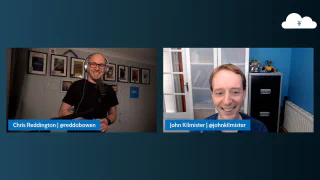
Tools of a Software Architecture for Everyone!
 Cloud with Chris
Software architecture is not just the domain of dedicated architects — the tools, practices, and communication patterns it relies on apply to every engineer on every team. In this episode, Chris is joined by John Kilminster, a software architect and Azure MVP, who walks through the essential toolbox he has built up over years in the role. Covering C4 diagrams, Architecture Decision Records, Tech Radars, Docs as Code, and Spotify's Backstage developer portal, this episode delivers practical guidance for any team looking to improve how they document, communicate, and align on technical decisions.
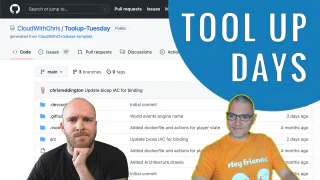
ToolUp Days #11
The series officially rebrands from ToolUp Tuesday to ToolUp Days, giving Chris and Matt the flexibility to keep a consistent cadence. This episode focuses on rethinking the game's data model — simplifying the player state object, introducing a BarType enum, and scaffolding both a player creation API and a bar management controller, with GitHub Copilot generating much of the boilerplate in real time.
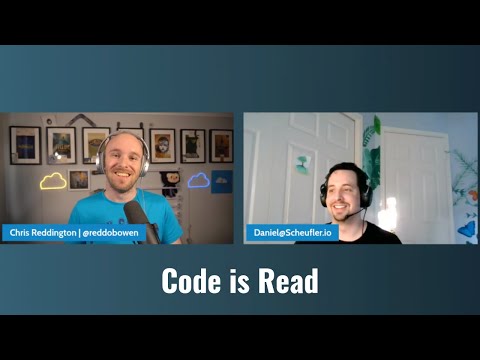
Code is Read
What separates code that teams maintain with confidence from code that becomes an unmaintainable burden? Chris is joined by Daniel Schreifler — developer, consultant, and author of "10 Days to Become a Better Developer" — to explore why readability is the most foundational software quality. From cognitive load and the early-exit pattern to domain-driven naming, inner sourcing, and TDD, this conversation reframes how we should think about writing code: not for the compiler, but for the next human who needs to change it.
Interfaces in Go
In this post, I'll be talking about how to use interfaces in Go. This is a continuation of my learning using the Go language. I'll use interfaces to create an application that interacts with several types of bank accounts.
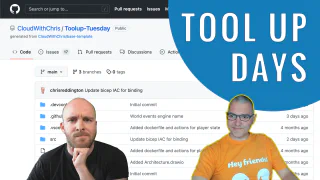
ToolUp Tuesday - #6
Chris and Matt wire up Dapr state management for their .NET player state service, configure VS Code debugging for multi-service development, and document game use cases covering player enrollment, world event ticks, and decision lifecycle.
Go Pointers - Using the & and * operators
I'll be transparent. The purpose of this post is to help with my own understanding of the Go & and * operators. It's going to be a very short post, and I'm going to try to explain the concepts in a way that I can understand. I've used these operators in C previously, but whenever I'm using them - I always end up having to remember the syntax / which operator is which / what they do. For whatever reason, it doesn't always come intuitively to me.
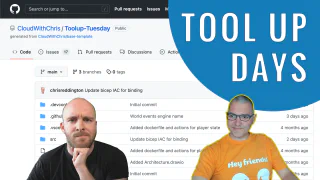
ToolUp Tuesday - #5
Chris and Matt refactor their Go player decisions API, restructuring packages and project layout. They compare the Gin and Gorilla Mux HTTP frameworks, explore Go interfaces and dependency injection patterns, and discuss unit testing and mocking strategies in Go.