DevOps
GitHub Codespaces, Visual Studio Code and Remote Containers
 Cloud with Chris
Setting up a development environment—installing the right SDK versions, extensions, and tools—wastes hours and causes 'works on my machine' problems. This episode shows how VS Code's Remote Containers extension and GitHub Codespaces solve this with containerised, reproducible dev environments defined in a devcontainer.json file. See a live demo of editing cloudwithchris.com entirely in a browser-based Codespace.

V001 - Weekly Technology Vlog #1 (Blog, Hugo, Azure, GitHub & Azure DevOps)
Chris launches the weekly vlog format with a recap of December 2020, including open source contributions to the Hugo Castanet theme and the start of a new community-focused Hugo theme project. He reviews Azure updates covering Azure Synapse Analytics GA and Microsoft BGP routing security improvements, highlights GitHub's DevSecOps tooling with CodeQL and Dependabot, and explains the new Azure DevOps service tag for network security groups.

GitHub Issues and GitHub Discussions
GitHub Issues provides a lightweight project backlog with labels, milestones, assignees, and kanban project boards, while GitHub Discussions (launched at GitHub Universe) enables open community conversations through categorised threads for Q&A, ideas, and show-and-tell. This episode demonstrates converting issues to discussions, automating workflows with GitHub Actions issue and project event triggers, and using project board automation rules.

GitHub Universe and GitHub Actions Deployments
In this episode, we're going to be taking a slight detour away from GitHub actions and focus on some of the announcements from GitHub universe last week. We're going to explore them both from the announcements, and also take a look at some of those features that have already been released. Stay tuned!
GitHub Actions and Azure - Deploying ARM templates with GitHub Actions
Before deploying application code, you need cloud infrastructure in place. This episode demonstrates how to deploy Azure infrastructure using ARM templates (Infrastructure as Code) directly from a GitHub Actions workflow—covering ARM template structure, the azure/arm-deploy action, repository organisation, and service principal setup for automated, repeatable Azure deployments.

GitHub Actions and Azure - Deploying .NET Core code to Azure App Service
You have your .NET Core application code and your Azure App Service infrastructure is ready. Now it's time to wire them together with an automated GitHub Actions deployment pipeline. This episode walks through building a multi-job workflow that compiles, publishes, and deploys your .NET Core app to Azure App Service using publish profiles and GitHub Secrets.

GitHub Actions and Azure - Source Controlling our Code using Git
This series opener demonstrates source-controlling a .NET MVC project scaffolded with dotnet new mvc inside Windows Subsystem for Linux, using VS Code's built-in Git integration to stage commits, push to a new GitHub repository, and set a remote origin. It also introduces the GitHub Actions Azure Actions catalogue — including azure/login, azure/cli, and azure/webapps-deploy — as a foundation for the CI/CD automation covered in subsequent episodes.
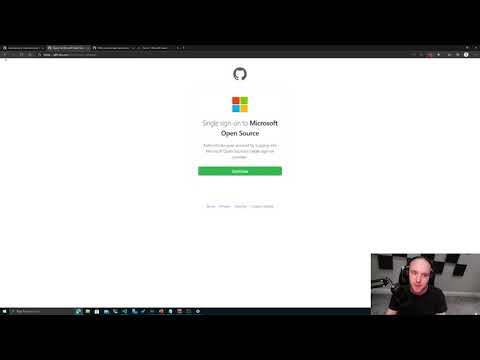
GitHub Actions and Azure - Getting started with GitHub Actions and Azure Login
New to GitHub Actions? This episode is your starting point. Chris walks through GitHub Actions workflow fundamentals—YAML syntax, jobs, steps, GitHub-hosted runners, and secrets management—then shows how to authenticate against Azure using the Azure Login action and a service principal, before running Azure CLI commands as part of your first automated pipeline.
16 - The Backends for Frontends and Strangler Pattern with Peter Piper
Managing APIs across web, mobile, and multiple consumer types creates tight coupling that slows modernisation and makes versioning painful. In this episode, Chris Reddington is joined by Peter Piper to explore the Backend for Frontends (BFF) pattern — creating dedicated backends tailored to each consumer — alongside the Strangler Fig pattern for incrementally migrating legacy monoliths without disrupting existing clients. The Façade pattern also features as a key decoupling mechanism for smooth API migrations. Part of the "Architecting for the Cloud, One Pattern at a Time" series.
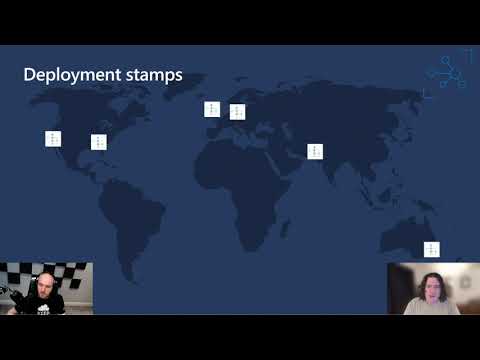
14 - The Deployment Stamps Pattern
The Deployment Stamps pattern is a powerful cloud architecture approach for scaling, resilience, and multi-tenancy. In this episode, Chris Reddington is joined by John Downs — who contributed the pattern to the Azure Architecture Center — to explore how stamping out independent copies of your application stack across regions enables geographic distribution, data sovereignty, isolated failure domains, and deployment rings for staged rollouts. Discover when to use this pattern, how Azure itself relies on it internally, and the key considerations around request routing, cross-stamp querying, and disaster recovery planning.