Event-Driven Architecture
ToolUp Days #15
Chris and Matt pick up inside GitHub Codespaces, getting the Player State service running locally on the first attempt thanks to Dapr's environment-variable secret store and Codespaces secrets. They then wire up the World Events Engine with Azure Storage Queue bindings and Table Storage state before hitting a stubborn .NET minimal API routing bug — becoming the cliffhanger that sets up the next session.
Microservices have communication issues, especially when they fail
Communication between microservices is one of the trickiest challenges in distributed systems — especially when things go wrong. In this episode, Chris is joined by Francesco, a software engineer building a real-world payment gateway, to explore microservices communication patterns. They dive deep into the Saga pattern for managing multi-step distributed transactions, covering orchestration-based Sagas with AWS Step Functions, compensating transactions for graceful rollbacks, and event-driven messaging via EventBridge. The conversation also covers observability in distributed systems and applying Occam's Razor to architecture decisions.
Building Serverless Cloud-Native applications with Azure Container Apps
Technology is always evolving. We’ve seen physical machines turn into virtual. Virtual machines turn into containers. But often, those containers need an orchestrator like Kubernetes to reap the full benefits. What if there was a simpler option? Join Tighe and Chris as they introduce you to Azure Container Apps (Preview), Dapr and Keda - Helping you get started on your serverless cloud native journey.
LunchBytes Series 1 Episode 2: DevOps for Logic Apps
Quickly develop highly scalable integration solutions for your enterprise scenarios using Logic Apps. Join us as we explore the continuous integration and continuous deployment for Azure Logic Apps.
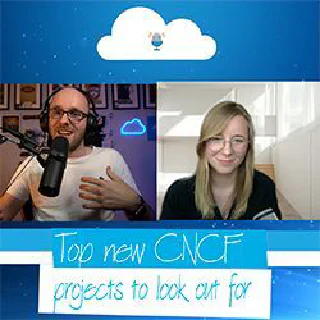
Top new CNCF projects to look out for
The Cloud Native Computing Foundation (CNCF) gave us Kubernetes and Prometheus — but did you know there are over 90 more projects in the ecosystem? In this episode, Chris is joined by Annie Talvasto (CNCF/Kubernetes meetup organizer, Finland) to explore the most exciting CNCF projects across sandbox, incubating, and graduated tiers. They cover Helm for Kubernetes package management, Artifact Hub for centralised artifact discovery, Linkerd for lightweight service mesh with built-in observability and resilience, KUDO for declarative Kubernetes operator creation without deep Go expertise, and KEDA for event-driven autoscaling. Whether you're new to cloud native or a seasoned practitioner, this session will inspire you to explore — and contribute to — the wider CNCF landscape.
V020 - Weekly Technology Vlog #20
Weekly Vlog #20 celebrates hitting 500 YouTube subscribers ahead of schedule, then reviews one of Chris's most content-heavy weeks: Azure Pipelines-as-code tutorials, an event-driven architecture walkthrough using Azure Event Grid and Azure Functions, and a candid mental health live stream. The headline Azure announcement is Azure Static Web Apps reaching general availability with built-in CI/CD, serverless API integration, and free SSL. GitHub rounds out the episode with new hardware security key support for SSH operations and native video uploads to issues and pull requests.
Cloud Drops - Building an Event-Driven workflow with Event Grid
Azure Event Grid routes blob-created events from Azure Storage to downstream handlers, enabling scalable event-driven pipelines where producers and consumers are fully decoupled. This Cloud Drop builds an end-to-end workflow using an Event Grid system topic, subject filtering, an Azure Storage Queue as the event handler, a system-managed identity with the Storage Queue Data Message Sender role, and an Azure Function queue trigger to process and remove each message.
Building an Event-Driven workflow with Event Grid
You may have heard of Event-Driven Architectures before, but haven't had the chance to get hands-on and build one as yet. That's exactly what we'll be working through in this blog post!
Cloud Drops - Beginners guide to PowerShell in Azure Functions
Azure Functions supports PowerShell Core as a runtime stack, enabling PowerShell scripters to build serverless event-driven workflows without compiled code. This Cloud Drop demonstrates creating an HTTP trigger and an Event Grid trigger function, configuring requirements.psd1 to load the Az PowerShell module, and using a system-assigned managed identity with the Contributor RBAC role to dynamically tag Azure resource groups on creation.
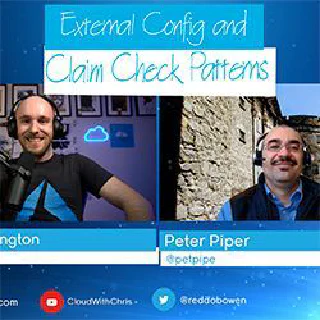
33 - External Config and Claim Check Pattern - Easier Management and Externalising Payloads
Chris and Peter cover two cloud design patterns in depth. The External Configuration Store pattern addresses one of the most critical security concerns in cloud development: keeping secrets and connection strings out of source code. They explore Azure Key Vault and Azure App Configuration as canonical implementations, discuss deployment slot behaviour, and highlight the risks of committing credentials to version control. The Claim Check pattern tackles a different challenge — what happens when your message payload exceeds the size limits of your messaging infrastructure (Azure Service Bus, Azure Queue Storage)? By externalising the payload to a data store and passing only a correlation ID on the queue, you gain scalability and flexibility at the cost of added latency. Azure Event Grid's automatic claim check generation is also demonstrated. Security is a thread running through both patterns: compromised config stores and poisoned messages both demand an operational response plan.