Microservices
ToolUp Tuesday - #6
Chris and Matt wire up Dapr state management for their .NET player state service, configure VS Code debugging for multi-service development, and document game use cases covering player enrollment, world event ticks, and decision lifecycle.
Enqueue and Dequeue messages locally with dapr, Azure Service Bus and Azure Storage Queues
In a previous blog post, I provided an overview of the Distributed Application Runtime (dapr) and explained how it is a useful framework when building microservices. In this blog post, I will show you how to use dapr to enqueue and dequeue messages locally with Azure Service Bus and Azure Storage Queues.
ToolUp Tuesday #2
Chris and Matt start building the Player State API using .NET Web API, defining data models for the SpaceBar management sim game. They scaffold the project, discuss minimal APIs versus controller-based approaches, and set up a GitHub Actions CI workflow to build and validate the service on every commit.
ToolUp Tuesday - #1
In this debut episode of ToolUp Tuesday, Chris and Matt kick off a new series by planning a massively multiplayer management sim game from scratch. They design a microservices architecture, choosing .NET for the world events engine and Go for player decisions, and set up a GitHub repository with GitHub Projects for backlog management.
Introduction to The Distributed Application Runtime (Dapr)
In this post, we're going to explore the Open Source project known as Dapr (The Distributed Application Runtime). This post is primarily aimed at those who already have an understanding of Containers, Kubernetes and Microservices. However, if you're not familiar with these topics - I'll do my best to set the right context and background without making the blog too lengthy!
Tales from the Real World - Architecting the Transformation
Most organizations undergoing digital transformation are moving through maturity stages — from localized, monolithic setups toward agile, cloud-native, data-driven platforms. But what does it take to architect that journey? In this session, Asanka Abesinghe shares a practical framework covering the six design principles of digitally-driven organizations (decentralized, lean-agile, open standards, customer-centric, cloud-native, and data-driven), how to layer business, information, application, and technology architecture, and the evolving role of the architect as an organizational bridge between business strategy and technical execution. From the build-vs-buy decision to maturity-model road-mapping, this is an essential session for architects leading or contributing to enterprise transformation programmes.
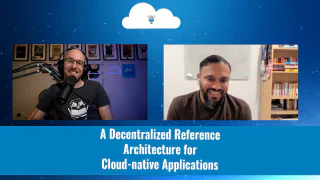
43 - A Decentralized Reference Architecture for Cloud-native Applications
 Cloud with Chris
Asanka Abeysinghe, Chief Technology Evangelist at WSO2, introduces the cell-based reference architecture — a vendor-neutral, decentralised framework for cloud-native applications. The session explores microservices governance challenges, how Domain-Driven Design scopes service responsibilities into well-bounded cells, and how the cell-based model aligns architecture, development, and DevOps teams into cohesive autonomous units built around business domains.
How to be successful with monitoring in Azure
Monitoring is often an afterthought — until something breaks. In this episode, Chris is joined by Vanessa Bruwer, Senior Engineer on Microsoft's FastTrack for Azure team, to explore how organisations can build a structured observability strategy using Azure Monitor, Application Insights, Log Analytics, and distributed tracing. Vanessa shares the FastTrack methodology for taking teams from zero monitoring knowledge to self-sufficient Azure Monitor configuration, covering alerting strategy, metrics, and the differences between monitoring a VM versus a distributed microservice architecture.
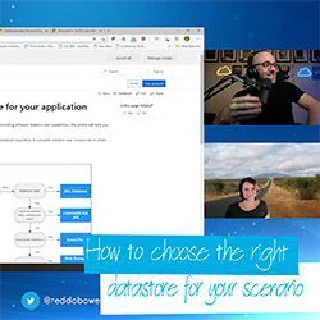
42 - How to choose the 'Right' Datastore for your scenario
With so many data store options in Azure — relational SQL, NoSQL, document databases, blob storage, key-value stores, and more — how do you choose the right one for your workload? In this episode, Chris Reddington is joined by Steph Martin to explore the concept of polyglot persistence and the trade-offs between data store types. From Azure SQL and Cosmos DB to blob storage and microservices data patterns, they discuss how workload requirements, access patterns, RTO/RPO targets, and application architecture should guide your data platform decisions. A practical guide for architects and developers navigating the modern data landscape on Azure.
Top new CNCF projects to look out for
The Cloud Native Computing Foundation (CNCF) gave us Kubernetes and Prometheus — but did you know there are over 90 more projects in the ecosystem? In this episode, Chris is joined by Annie Talvasto (CNCF/Kubernetes meetup organizer, Finland) to explore the most exciting CNCF projects across sandbox, incubating, and graduated tiers. They cover Helm for Kubernetes package management, Artifact Hub for centralised artifact discovery, Linkerd for lightweight service mesh with built-in observability and resilience, KUDO for declarative Kubernetes operator creation without deep Go expertise, and KEDA for event-driven autoscaling. Whether you're new to cloud native or a seasoned practitioner, this session will inspire you to explore — and contribute to — the wider CNCF landscape.