Microservices
Introducing Logic Apps Preview
Following hot off the heels of my recent blog post introducing Logic Apps and how I use the technology on cloudwithchris.com, I thought it made sense for the second post to continue the Logic Apps theme. This time, we'll be focusing on Logic Apps preview (sometimes referred to as Logic Apps v2) - the evolution of Logic Apps. Typically when you deploy Logic Apps, you deploy it as a multi-tenanted service. There are some benefits to that, including the serverless capability, so being able to pay per execution rather than an overall infrastructure cost. But what if cost is less of a requirement for you? What if you care more about portability, greater performance, and ultimately control over your environment? If those are more along the lines of your requirements, then you may want to investigate the Logic Apps previewhttps://docs.microsoft.com/en-us/azure/logic-apps/logic-apps-overview-preview. The Logic Apps preview builds upon the Azure Functions extensibility model. Yes, you read that right - Azure Logic Apps is effectively building on top of Azure Functions. Why should you care? Anywhere that Azure Functions can run, then Logic Apps can run.
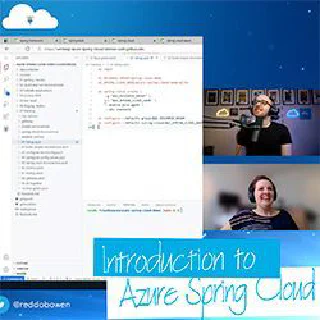
35 - A discussion on Azure Spring Cloud
Spring, Spring Boot, and Azure Spring Cloud demystified. Chris is joined by Gitte Vermeiren (Microsoft FastTrack Engineer) to explore what Spring and Spring Boot offer Java developers, how Azure Spring Cloud provides a fully managed platform for running microservice workloads without managing underlying infrastructure, and how it compares to Azure App Service and AKS. Whether you're a Java developer evaluating Azure or a .NET developer curious about the Java ecosystem, this episode bridges the gap with clear analogies and live demos.
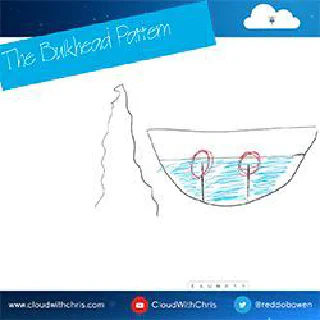
34 - The Bulkhead Pattern (Isolate your components to prevent failures)
The Bulkhead pattern takes its name from the watertight compartments in a ship's hull. Just as those compartments prevent a single breach from sinking the whole vessel, the Bulkhead pattern isolates components of a cloud application so that failures or resource exhaustion in one service cannot cascade to others. This episode covers partitioning strategies, connection pools, Kubernetes resource limits, and multi-tenancy considerations.

29 - The Sidecar and Ambassador Patterns
When modernising a legacy application, rewriting everything from scratch is rarely feasible. The Sidecar and Ambassador cloud design patterns offer a pragmatic alternative — attach a companion process to offload cross-cutting concerns like retry logic, circuit breaking, and protocol translation without modifying the application itself. Chris and Peter explore both patterns in depth, covering when to use each, how they relate to service meshes, and their role in Kubernetes-based architectures.
CGN2 - Cloud Gaming Notes Episode 2 - Matchmaking Services
Ever thought about what it takes to host a multiplayer game in the cloud? In the second episode of Cloud Gaming Notes, Chris and Lee Williams go hands-on with Halo 5 Guardians to explore the engineering behind matchmaking services. They cover the Actor model and Azure Service Fabric, skill-based matchmaking algorithms, the critical role of latency in competitive gaming, and how live ops and DevOps principles keep a game-as-a-service continuously updated without downtime. Real-world cloud architecture through the lens of AAA gaming.

27 - The Compute Resource Consolidation Pattern (Optimise for Cost!)
Are you running dedicated compute for every tenant, microservice, or application instance — and paying for it? The Compute Resource Consolidation pattern shows you how to consolidate tasks onto shared infrastructure, such as a single AKS cluster with namespace isolation or an Azure SQL elastic pool, to reduce costs and management overhead. This episode explores the key trade-offs: blast radius containment, noisy neighbour contention, scalability profiles, and multi-tenancy strategies. Part of the "Architecting for the Cloud, One Pattern at a Time" series.
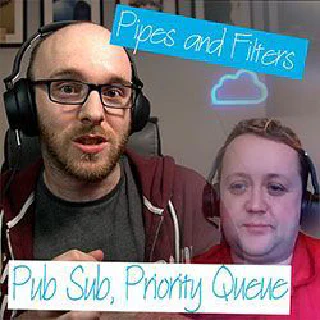
26 - The Pub Sub, Priority Queue and Pipes and Filter Patterns
Chris Reddington and Will Eastbury cover three closely related messaging patterns in one packed episode. They start with the Publish-Subscribe (Pub/Sub) pattern — arguably the most transformative shift in enterprise messaging — where a single producer broadcasts to multiple isolated subscribers via Azure Service Bus topics or Azure Event Grid. Real-world use cases include insurance aggregators, credit check pipelines, and bank account sign-up workflows. From there they move to the Priority Queue pattern, which ensures high-priority messages are processed before lower-priority ones even when consumers are under load. Finally, the Pipes and Filters pattern decomposes complex message processing into a chain of discrete, reusable transformation steps — reducing complexity and enabling independent scaling of each stage. The episode also connects these patterns back to earlier topics like Competing Consumers and Queue-Based Load Leveling, and flags related patterns including Choreography and Compensating Transactions.
24 - Health Endpoint Monitoring Pattern (Monitor your service and its dependencies!)
Stop waiting for users to tell you something is broken. The Health Endpoint Monitoring pattern gives your services a dedicated health-check endpoint that aggregates the status of all dependent components—databases, APIs, storage—into a single observable response. This episode covers the pattern in detail, including design considerations around caching, security, denial-of-service exposure, and integration with Azure Monitor and Application Insights.
21 - The Queue Based Load Levelling and Competing Consumers Pattern
 Cloud with Chris
Do you have an application with specific scalability and continuity-of-service requirements? What happens when traffic spikes dramatically — think a major concert or FIFA World Cup ticket sale crashing a site? In this Architecting for the Cloud episode, Chris and Will Eastbury walk through three closely related patterns: Queue-Based Load Levelling, Competing Consumers, and the Asynchronous Request-Reply pattern. They explore how message queues act as shock absorbers for traffic spikes, how competing consumers enable elastic horizontal scaling, and how async request-reply lets you retrofit these patterns into existing architectures with minimal disruption. Key trade-offs covered include queue depth limits, Azure Service Bus configuration, distributed tracing with Application Insights, and when the added complexity genuinely justifies reaching for these patterns.
20 - The Anti-corruption layer, Gateway Aggregation and Gateway Routing patterns
Cloud with ChrisPeter Piper joins Chris Reddington for another episode in the Architecting for the Cloud, One Pattern at a Time series. Building on the Façade and Strangler patterns, they explore three related cloud design patterns: the Anti-Corruption Layer (translating between legacy and modern domain models), Gateway Aggregation (collapsing multiple backend calls into a single client response), and Gateway Routing (layer-7 routing to decouple consumers from versioned backend services). Real Azure service examples — including API Management, Application Gateway, and Azure Front Door — are used throughout.