Testing
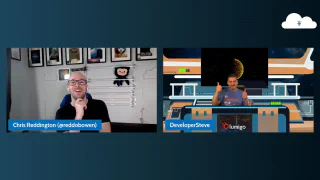
Building, Deploying and Observing SDKs as a Service
 Cloud with Chris
Manually maintaining SDKs across multiple programming languages is slow, error-prone, and a constant drag on developer velocity. This episode—featuring developer advocate Steve Kuching—explores using the open-source OpenAPI Generator to automate SDK creation from an OpenAPI spec, deploying the generator as a containerised service, and observing the entire pipeline with OpenTelemetry auto-tracing and Lumigo. Learn how to apply the same build, test, and observe principles you use for services to your SDK generation pipeline.
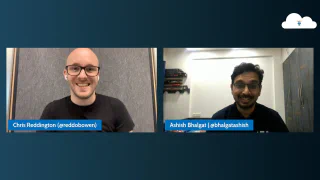
Chaos Engineering for Cloud native Apps
Chaos engineering is the discipline of proactively experimenting on distributed systems to build confidence in their ability to withstand production failures. Chris is joined by Ashish Balgath (Cloud Solution Architect at Thoughtworks) to explore how to introduce fault-injection experiments incrementally — from a developer's local machine all the way to production — using tools such as Chaos Monkey and fault-injection simulator tools.
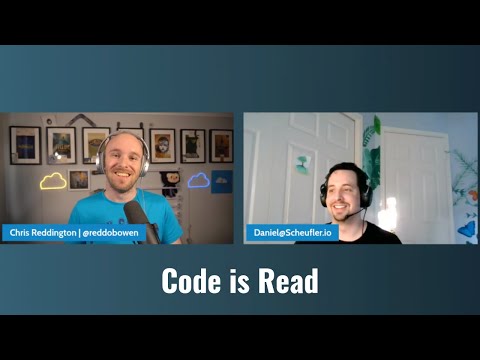
Code is Read
What separates code that teams maintain with confidence from code that becomes an unmaintainable burden? Chris is joined by Daniel Schreifler — developer, consultant, and author of "10 Days to Become a Better Developer" — to explore why readability is the most foundational software quality. From cognitive load and the early-exit pattern to domain-driven naming, inner sourcing, and TDD, this conversation reframes how we should think about writing code: not for the compiler, but for the next human who needs to change it.
Using GitHub Actions to summarise your Go tests
GitHub recently posted about a new GitHub Action that can be used to summarise your test results. The action is called test-summary/action, available at github.com/test-summary/action. There are several examples on how to use the action at github.com/test-summary/examples. However, there were no examples on how to use this with Go. I contributed a pull request which showed how to achieve this. In this post, I will show how to use the action with Go.
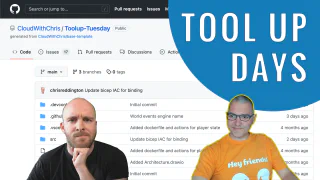
ToolUp Tuesday - #5
Chris and Matt refactor their Go player decisions API, restructuring packages and project layout. They compare the Gin and Gorilla Mux HTTP frameworks, explore Go interfaces and dependency injection patterns, and discuss unit testing and mocking strategies in Go.
Feature Flags - The Art of the IF and Deployment
Feature flags sound deceptively simple — they're just if statements. But mastering them requires a mature DevOps foundation and disciplined release engineering. Chris Reddington is joined by Chris Ayers (Azure Fast Track Engineer at Microsoft) for a deep dive into separating deployments from releases, choosing the right tooling, and implementing feature flags safely using Azure App Configuration, LaunchDarkly, and Optimizely in .NET applications.
Tales from the Real World - Shift Left your Performance Tests
Performance testing has traditionally lived in high-fidelity pre-production environments — but by the time you find a performance issue that late in the cycle, the cost to fix it is already compounding. In this episode, Chris is joined by HariKrishnan, Cloud Transformation Consultant, to explore a practical shift-left approach to performance testing. Hari shares real-world experience identifying the categories of performance issues that can be reproduced locally or in CI pipelines using tools like Gatling and Docker, reducing MTTR and avoiding the environment time-sharing bottlenecks that slow teams down.
DevOps Trends
A decade after Patrick Debois coined "DevOps," the landscape looks radically different. In this episode, Daniela Fontani — CTO at Central Consulting and long-time open source contributor — breaks down the most important DevOps trends reshaping the industry today: DevSecOps, GitOps, NoOps, automation-first pipelines, and the growing role of platform engineering. Plus, the honest truth about which buzzwords actually matter and which you can safely ignore.
Find vulns in your code before they find you
Security vulnerabilities don't wait to be discovered — and developers are often unknowingly shipping them through open source dependencies. In this episode, Chris is joined by DeveloperSteve Coochin, Developer Advocate at Snyk, to explore the real-world state of vulnerabilities in modern applications. Steve shares findings from his research into the PHP ecosystem and explains how developers can shift vulnerability detection left — catching CVEs in dependencies before they reach production, by integrating tools like Snyk directly into their CI/CD pipelines and GitHub workflows.
Cloud Drops - What is Continuous Integration (CI)?
Cloud with ChrisContinuous Integration (CI) is a DevOps practice where engineers frequently merge small code changes into a central repository, triggering automated builds and test suites to catch regressions early. This video explains how CI applies equally to application code, Infrastructure as Code, database schemas, and data science notebooks, and shows how GitHub Actions and Azure Pipelines act as automated gatekeepers through pull request workflows.