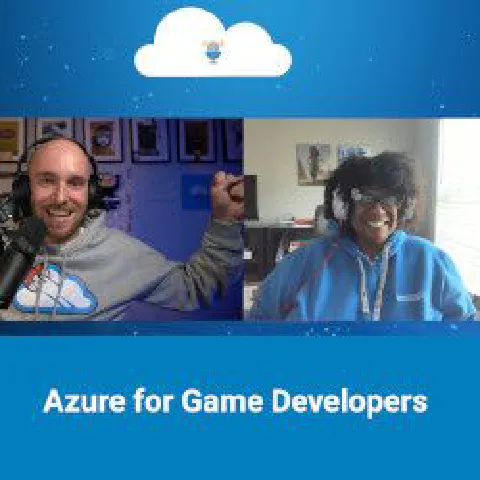
CGN8 - Cloud Gaming Notes Episode 8 - Azure for Game Developers
Chris Reddington and LaBrina Loving — Developer Advocate for Gaming at Microsoft — explore what it takes to get started with game development on Azure, regardless of your background. LaBrina brings twenty years of enterprise development experience, making her perspective especially relevant for developers considering a similar path.
Key Topics Covered
- LaBrina’s background: Two decades in the Microsoft stack — .NET, SharePoint, Dynamics, and Azure since its early days in 2010. Her entry into gaming came through an interest in Unity for mixed reality and VR, before moving into a dedicated game developer advocacy role.
- Cloud adoption in game studios: Game studios are at a similar inflection point to where enterprise organisations were several years ago — beginning to understand the power of cloud, moving workloads off dedicated servers, and realising the benefits of managed, scalable infrastructure.
- Enterprise skills transfer directly: Software fundamentals — clean architecture, scalable design, testing, and DevOps practices — carry over to game development. There is more in common between the two disciplines than most developers expect.
- Key technical differences: Latency is paramount. Where enterprise applications rely on TCP connections, game networking commonly uses UDP and socket-based communication for real-time, low-latency responsiveness. Recognising this early avoids painful rewrites.
- Getting started with Unity: For .NET developers, Unity provides a natural on-ramp to game development, sharing the C# language and familiar tooling.
- Accessibility of the cloud for games: Azure’s managed services remove much of the infrastructure complexity for independent studios and game developers, letting teams focus on gameplay rather than operations.
Related Content
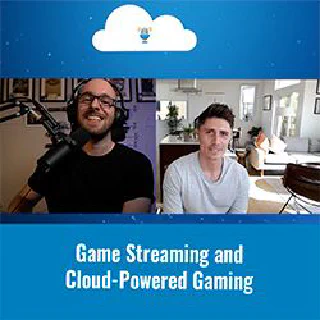
CGN7 - Cloud Gaming Notes Episode 7 - Game Streaming and Cloud-Powered Gaming
Chris Reddington is joined by Lee Williams to explore game streaming — the technology that streams a game to your device from cloud-hosted infrastructure, rather than running it locally. The episode covers how cloud economies of scale make low-latency game delivery viable, the consumer shift toward subscription models (Xbox Game Pass, Google Stadia), what the streaming model means for game creators building games as living services, and the future of multi-device gaming experiences.
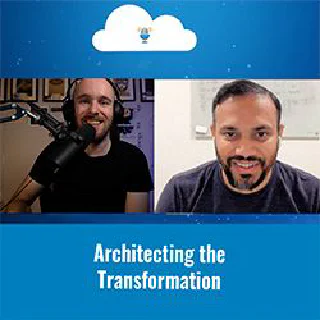
Tales from the Real World - Architecting the Transformation
Most organizations undergoing digital transformation are moving through maturity stages — from localized, monolithic setups toward agile, cloud-native, data-driven platforms. But what does it take to architect that journey? In this session, Asanka Abesinghe shares a practical framework covering the six design principles of digitally-driven organizations (decentralized, lean-agile, open standards, customer-centric, cloud-native, and data-driven), how to layer business, information, application, and technology architecture, and the evolving role of the architect as an organizational bridge between business strategy and technical execution. From the build-vs-buy decision to maturity-model road-mapping, this is an essential session for architects leading or contributing to enterprise transformation programmes.
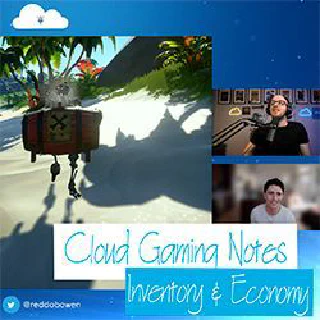
CGN3 - Cloud Gaming Notes Episode 3 - Inventory and Economy
Gaming has evolved from isolated save files to persistent, cloud-powered experiences that follow players across every device they own. In this third episode of Cloud Gaming Notes, Chris and Lee Williams explore the cloud architecture behind in-game inventory and economy systems — using Sea of Thieves as a live example. Topics include persistent state management with Azure Cosmos DB, managed gaming backends with PlayFab, Live Ops patterns, and how cloud infrastructure enables monetisation and long-term player retention at scale.