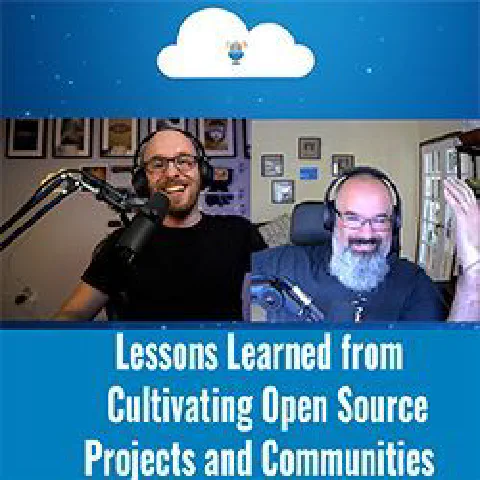
Lessons Learned from Cultivating Open Source Projects and Communities
Open source projects and communities are the backbone of modern software development, yet the human side of building and sustaining them is rarely discussed as openly as the technology itself. In this episode, Chris is joined by JJ Asghar, Developer Advocate at IBM (yes, his email really is awesome@ibm.com), who shares hard-won lessons from over a decade cultivating open source projects and communities.
JJ’s journey began tending the FAQ for CRUX, a stripped-down BSD-style Linux distribution, before moving on to the OpenStack-Chef project — building clouds at scale — and later contributing to and leading efforts in the Kubernetes, Tekton, and Istio ecosystems, with a current focus on OpenShift.
Key lessons from this episode include:
- Scope is everything: One of the hardest challenges for any open source project is defining what it is and, equally importantly, what it is not. Projects that try to absorb everything lose their identity; those scoped too narrowly never find their community.
- Soft skills matter more than technical skills: Anyone can learn a technology. Knowing how to communicate, resolve conflict, and bring people along on a shared vision is what separates maintainers who burn out from those who build enduring communities.
- Be kind to your maintainers: Open source contributors typically give their own time out of passion. Recognising and respecting that effort — as a user, contributor, or enterprise consumer — is foundational.
- Respect the project’s goals: As JJ puts it, anyone can be involved in open source, but you need to decide whether you are willing to work towards the goals of the project, or whether a fork or a separate effort is the right path.
- Failures are part of the journey: Not every project succeeds and not every community sustains itself. JJ shares openly about both the successes and the “horrible failures”, making this one of the more candid conversations about what it actually takes.
A must-listen for anyone contributing to, maintaining, or considering starting an open source project — and equally valuable for enterprise teams thinking about their relationship with the open source projects they depend on.
Related Content
V027 - Weekly Technology Vlog #27
In the first tech-only episode of the new alternating format, Chris demonstrates GitHub Copilot's Technical Preview using Ruby and Python — from API integrations and regex generation to Azure Functions and IoT Hub messaging — and discusses the FAQ around code ownership, training data, and personal information filtering. The episode also covers CNCF fundamentals, Azure API Management policies with JWT token validation, Traefik proxy on Kubernetes, and the general availability of Azure Arc, including Azure SQL enabled by Arc.
41 - DevOps on Azure
In this episode, Chris is joined by Mert Yeter — software architect, Azure MVP, and Traefik Ambassador — for a live-demo-driven tour of DevOps on Azure. Starting with Azure DevOps Starter, Mert walks through spinning up a full CI/CD pipeline for a containerized .NET application in just a few clicks, covering Azure Container Registry, Azure Container Instances, and Azure Kubernetes Service. The session then dives into Traefik: an open-source cloud-native reverse proxy and load balancer with powerful pluggable middleware, dynamic service discovery, and a rich dashboard for managing Kubernetes ingresses. Whether you are new to containers or looking to level up your AKS deployments, this episode covers the essential building blocks.
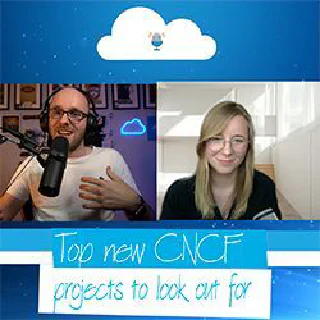
Top new CNCF projects to look out for
The Cloud Native Computing Foundation (CNCF) gave us Kubernetes and Prometheus — but did you know there are over 90 more projects in the ecosystem? In this episode, Chris is joined by Annie Talvasto (CNCF/Kubernetes meetup organizer, Finland) to explore the most exciting CNCF projects across sandbox, incubating, and graduated tiers. They cover Helm for Kubernetes package management, Artifact Hub for centralised artifact discovery, Linkerd for lightweight service mesh with built-in observability and resilience, KUDO for declarative Kubernetes operator creation without deep Go expertise, and KEDA for event-driven autoscaling. Whether you're new to cloud native or a seasoned practitioner, this session will inspire you to explore — and contribute to — the wider CNCF landscape.