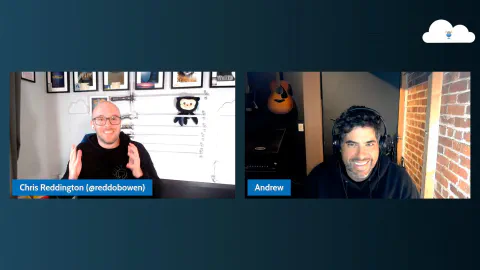
Rapid Prototyping as a way to validate your idea
Rapid prototyping is a structured approach to validating ideas quickly — before committing significant time, budget, or architecture to a direction that may not work. But not all rapid prototyping is the same.
In this episode, Chris is joined by Andrew Greenstein, CEO of SF AppWorks and host of “The Next Great Thing” podcast, who outlines three distinct types of rapid prototyping:
- Design Sprints — Jake Knapp’s 5-day sprint framework for validating concepts through lightweight prototyping and user testing, without writing production code.
- Iterative Feature Building — Incremental development cycles where small, shippable features are tested in production to learn what users actually value.
- Platform Proof-of-Concepts (POCs) — Short spikes to evaluate new technologies or platforms before making a long-term architectural commitment.
Kent Beck’s product triathlon
Andrew references Kent Beck’s model of product development as a three-phase triathlon: explore (discover what’s possible), expand (grow what works), and extract (optimise and scale). Rapid prototyping lives in the explore phase — and skipping it too quickly is a common source of wasted engineering investment.
Effectuation theory
The conversation draws on Dr. Saras Saraswathy’s effectuation theory from entrepreneurship research — the idea that expert entrepreneurs start with available means and ask what’s achievable, rather than starting with a fixed goal. The affordable loss principle (focus on what you can afford to lose, not expected ROI) is particularly relevant to deciding how much to invest in a prototype.
West Elm case study
Andrew shares a case study from working with the Innovation team at West Elm. Three parallel rapid prototypes were evaluated: an AI-powered Pinterest-style image matcher, a conversational chatbot for customer support, and a progressive web app. The PWA ultimately delivered measurable results: +8% revenue and +17% time on site — demonstrating how rapid prototyping surfaces the right investment before a full-scale build.
Related Content
Code is Read
What separates code that teams maintain with confidence from code that becomes an unmaintainable burden? Chris is joined by Daniel Schreifler — developer, consultant, and author of "10 Days to Become a Better Developer" — to explore why readability is the most foundational software quality. From cognitive load and the early-exit pattern to domain-driven naming, inner sourcing, and TDD, this conversation reframes how we should think about writing code: not for the compiler, but for the next human who needs to change it.
ToolUp Tuesday - #5
Chris and Matt refactor their Go player decisions API, restructuring packages and project layout. They compare the Gin and Gorilla Mux HTTP frameworks, explore Go interfaces and dependency injection patterns, and discuss unit testing and mocking strategies in Go.
Tales from the Real World - Architecting the Transformation
Most organizations undergoing digital transformation are moving through maturity stages — from localized, monolithic setups toward agile, cloud-native, data-driven platforms. But what does it take to architect that journey? In this session, Asanka Abesinghe shares a practical framework covering the six design principles of digitally-driven organizations (decentralized, lean-agile, open standards, customer-centric, cloud-native, and data-driven), how to layer business, information, application, and technology architecture, and the evolving role of the architect as an organizational bridge between business strategy and technical execution. From the build-vs-buy decision to maturity-model road-mapping, this is an essential session for architects leading or contributing to enterprise transformation programmes.