
Tales from the Real World - Shift Left your Performance Tests
Performance testing has traditionally been a late-stage activity — run against a near-production environment, by a dedicated team, after the code is already fully integrated. The problem is that by the time a performance issue surfaces at that stage, fixing it requires environment time-sharing, promotional deployments, and coordination across multiple teams. The cost compounds quickly.
In this episode, Chris is joined by HariKrishnan, Cloud Transformation Consultant, who has spent years guiding teams through cloud migrations and modernisation — and noticed that performance testing practices have barely evolved even as everything else moved forward. Hari walks through a practical framework for shifting bulk performance issue detection left, onto developer machines and CI pipelines, using lightweight containerised load-testing tools like Gatling and Docker.
Key topics covered:
- Why identifying performance issues in staging or production creates compounding MTTR and delivery risk
- The typical performance testing cycle — and the specific points where it breaks down at scale
- Classifying performance issues: which categories can be reproduced locally and which genuinely require high-fidelity environments
- Running containerised load tests (Gatling in Docker) in CI pipelines to catch regressions before they reach shared environments
- Balancing statistical validity with shift-left practicality — you cannot eliminate higher-environment testing, but you can dramatically reduce its burden
- How shift-left performance testing fits into a broader cloud-native and 12-factor application strategy
If performance has been a “we’ll deal with it in staging” problem on your team, this episode offers a grounded, practical framework for making it a first-class concern from the moment code is written.
Related Content
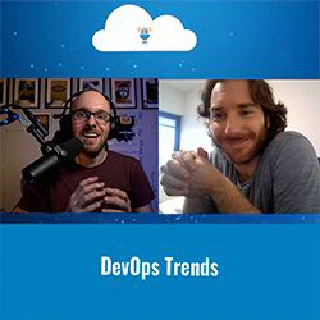
DevOps Trends
A decade after Patrick Debois coined "DevOps," the landscape looks radically different. In this episode, Daniela Fontani — CTO at Central Consulting and long-time open source contributor — breaks down the most important DevOps trends reshaping the industry today: DevSecOps, GitOps, NoOps, automation-first pipelines, and the growing role of platform engineering. Plus, the honest truth about which buzzwords actually matter and which you can safely ignore.
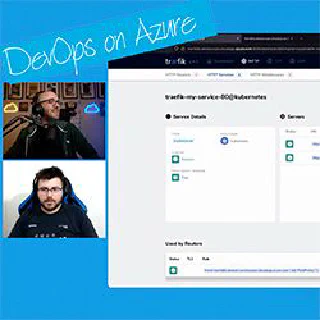
41 - DevOps on Azure
In this episode, Chris is joined by Mert Yeter — software architect, Azure MVP, and Traefik Ambassador — for a live-demo-driven tour of DevOps on Azure. Starting with Azure DevOps Starter, Mert walks through spinning up a full CI/CD pipeline for a containerized .NET application in just a few clicks, covering Azure Container Registry, Azure Container Instances, and Azure Kubernetes Service. The session then dives into Traefik: an open-source cloud-native reverse proxy and load balancer with powerful pluggable middleware, dynamic service discovery, and a rich dashboard for managing Kubernetes ingresses. Whether you are new to containers or looking to level up your AKS deployments, this episode covers the essential building blocks.
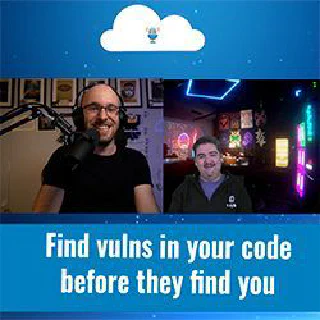
Find vulns in your code before they find you
Security vulnerabilities don't wait to be discovered — and developers are often unknowingly shipping them through open source dependencies. In this episode, Chris is joined by DeveloperSteve Coochin, Developer Advocate at Snyk, to explore the real-world state of vulnerabilities in modern applications. Steve shares findings from his research into the PHP ecosystem and explains how developers can shift vulnerability detection left — catching CVEs in dependencies before they reach production, by integrating tools like Snyk directly into their CI/CD pipelines and GitHub workflows.